
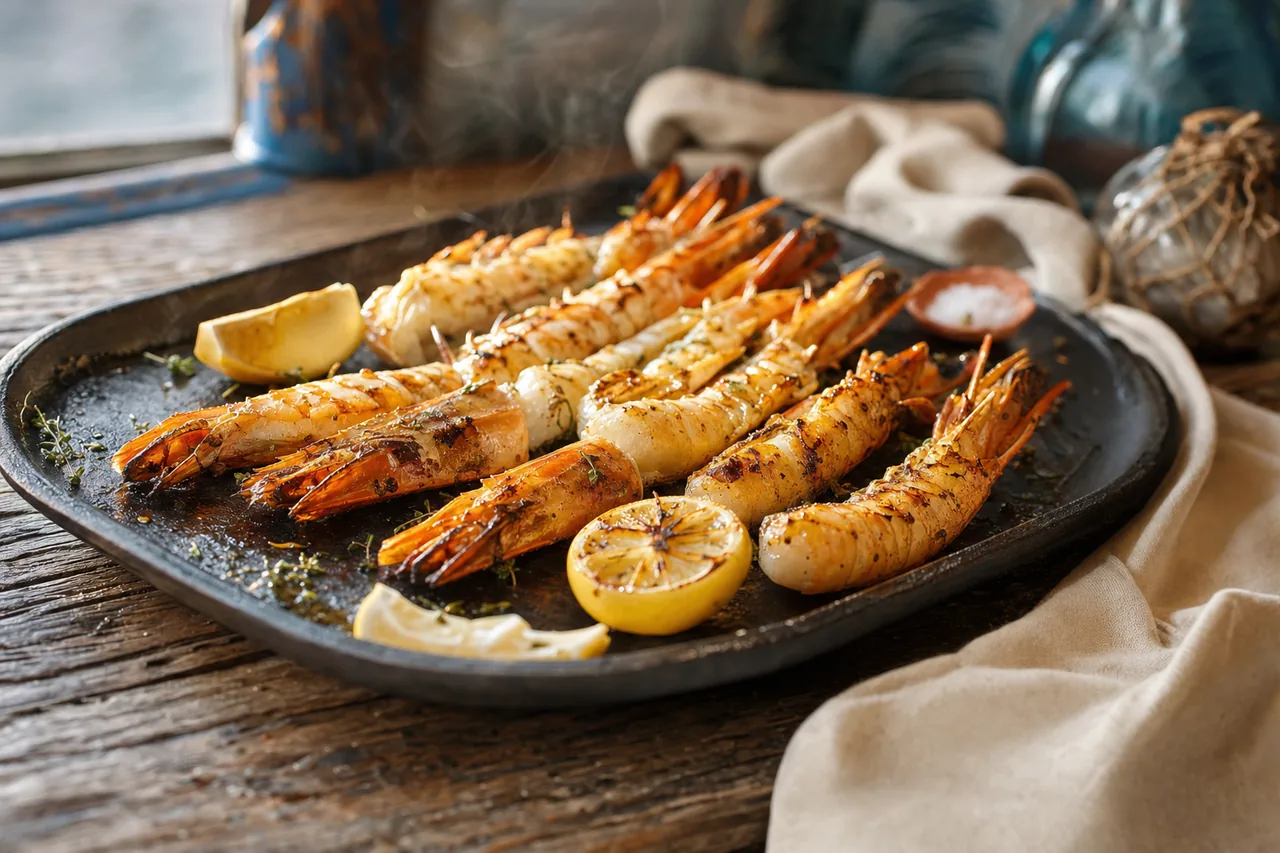
Prawns cook in 2 to 4 minutes, and that is the whole secret: almost every failed prawn has been left on the heat too long. A cooked one curls into a crescent and turns evenly pink, while an overcooked one curls once more into a tight O and goes rubbery. If you remember only the difference between a crescent and an O, you are already cooking prawns better than most people.
Below is which type suits which dish, how they are cleaned, how long they need with each of the four main methods, the mistakes that ruin even a fresh catch, and what to serve them with. All the timings are for medium prawns, peeled, on a properly heated surface.
How long do prawns take to cook?
The direct answer
Prawns cook in between 2 and 8 minutes depending on the method: 2 to 3 minutes in a pan, 3 to 4 on a grill, 2 to 3 when boiled and 6 to 8 in an oven at 200 degrees. Those timings are for medium, peeled prawns. Large tiger prawns want about a minute more per side, and small Black Sea greys are done in under two minutes in total.
How to tell a prawn is done
Colour and shape tell you everything, and more reliably than a timer. A raw prawn is grey and translucent and lies straight. A cooked one is solidly pink and curled into a crescent. If it has closed into a tight O, it has gone too far and the flesh has already tightened. Take them off the heat a second before they look ready, because they keep cooking in their own heat for another half minute.
Which type of prawn for which dish?
The five you will come across
Choosing the type decides more than the recipe does. Black Sea greys are small and sweet and belong in a quick starter where you eat them whole. Tiger prawns are large, with firm flesh and a shell that stands up to direct fire, so they are for the grill and the hot plate. King prawns are big and juicy and hold up as a main or in pasta. Pink prawns are medium with a gentler flavour, handy for risotto. Langoustines are close to lobster in taste and are kept for occasions.
Shell on or off
The shell holds moisture and adds flavour, so leave it on for the grill and the hot plate. When sautéing in a pan with garlic and olive oil, peeled prawns take up more of the sauce and are easier to eat. The compromise we often use is to peel the body and leave the tail: the meat is accessible and there is still something to hold on to.
How do you clean prawns?
The four steps
Cleaning takes longer than cooking and matters more to the result. If the prawns are frozen, thaw them slowly in the fridge, never under warm water, because the flesh takes on water and then falls apart. Then dry them well with a cloth, otherwise instead of searing they will steam. Remove the shell if the method calls for it, and take out the dark vein along the back with the tip of a knife. Season with salt, garlic and olive oil immediately before the heat, not an hour earlier, because salt draws out moisture.
Do you have to remove the vein?
With large prawns, yes. The dark vein is the digestive tract and in bigger prawns you notice it both in the taste and as grittiness. In small Black Sea greys it is practically imperceptible and nobody cleans them one by one. The rule is simple: the larger the prawn, the more obligatory it becomes.
| Method | Time | Heat | Result |
|---|---|---|---|
| Sautéing in a pan | 2-3 min | high | Juicy, with garlic aroma |
| Hot plate or grill | 3-4 min | very high | Light smokiness, firm crust |
| Boiling | 2-3 min | boiling salted water | Tender, for salads |
| Oven | 6-8 min | 200 degrees | Evenly cooked through |
What are the most common mistakes?
The three that ruin the catch
Three mistakes account for almost every failed plate of prawns. The first is long exposure to high heat, which tightens the protein and makes the flesh tough. The second is cooking straight from the freezer, without thawing and drying, so the prawns release water and steam in it. The third is an overcrowded pan: once the surface is densely covered, the temperature drops and instead of searing you get boiling.
How to fix them
Cook in batches, even if that means twice for two minutes rather than once for four. Let the pan get genuinely hot before the first prawn goes in. And do not stir constantly: turn once, so there is time for a crust to form.
What do you serve prawns with?
On the plate
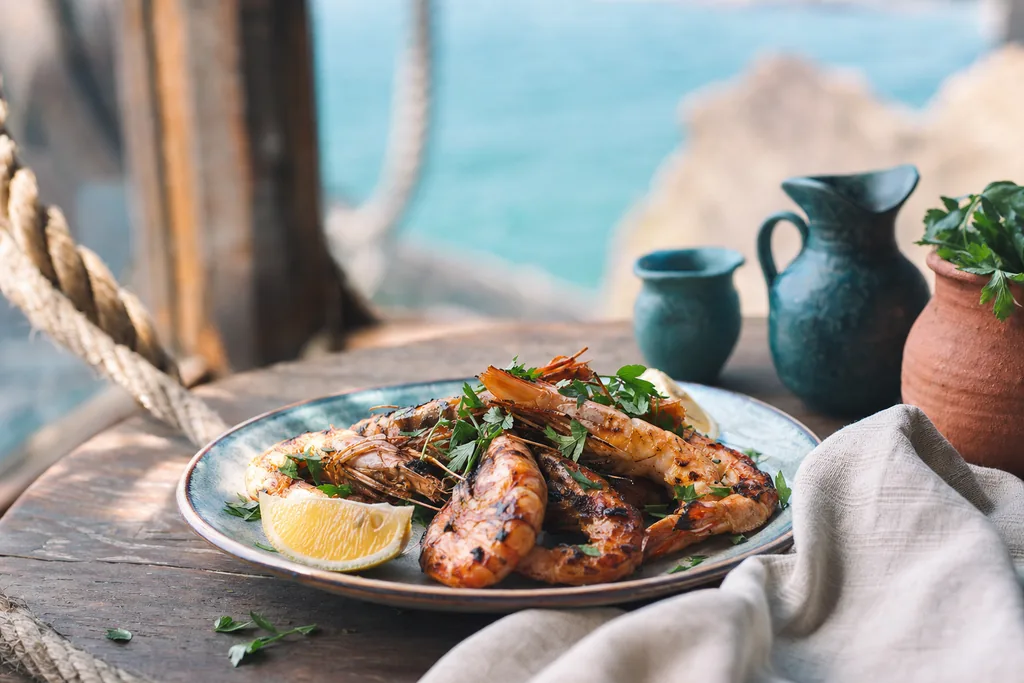
Simple accompaniments work best, because a prawn is sweet and easily smothered. Lemon, garlic butter, fresh parsley and a little chilli are enough. Capers work with the larger ones, and in pasta and risotto prawns take well to courgette, which does not fight them. Anything more elaborate starts covering the flavour instead of lifting it.
In the glass
Prawns go with a dry white with pronounced acidity or a dry rosé, and with breaded or fried versions sparkling wine clears the palate best. The logic is the same one we set out in the piece on white, rosé or red with fish, and for summer specifically we have written about rosé with seafood.
From our kitchen
Prawns appear in several places on the galleon's menu and each one is a different method. Tiger prawn tails are 14.31 € and go through high heat for minutes. The linguine with prawns and courgette uses smaller ones, sautéed quickly and added to the pasta at the end rather than the beginning. The salmon and prawn skewer is 16.99 € and is the one case where the prawn stays on the heat longer, because it has to keep pace with the fish beside it. The seafood salad is 13.19 € and there the prawns are boiled rather than seared, precisely because a seared prawn goes hard in a cold dish.
The practical thing we have learned over years at the hot plate: a prawn does not wait. Fish can sit for a minute under foil and come to no harm, a prawn cannot. So in the kitchen it goes on last, even when it is a starter, and comes straight out to the table. If you have ever been served slightly rubbery prawns, the cause is almost certainly not the produce but those two minutes between the hot plate and the table.
And one note on Black Sea greys: they are small, sweet and very short in season. When we have them, we do them as simply as possible, with only salt and olive oil, because anything else overpowers them. If you are interested in what is at its best when, we have written separately about the seasonal summer menu.
Frequently asked questions
How do I tell whether prawns are fresh?
Fresh ones are firm, with translucent grey flesh and a smell of the sea rather than ammonia. The shell clings tightly to the meat. If the head has darkened and the flesh comes away easily, the prawn is past it. The same principles apply to fish, which we cover in the piece on the signs of fresh fish.
Are frozen prawns worse than fresh?
Not necessarily. Prawns frozen quickly on board are often in better condition than "fresh" ones that have travelled for two days. What matters is that they have not been thawed and refrozen, and that you thaw them slowly in the fridge.
Can you cook prawns in the shell?
Yes, and on the grill it is preferable. The shell holds moisture and adds flavour. When sautéing, though, peeled prawns take up more of the sauce, so that is where we clean them.
Are prawns a strong allergen?
Yes, crustaceans are among the most common food allergens and on our menu they are marked as allergen number 2. If someone at the table has that allergy, say so when ordering, because it also changes how the platters are laid out, so dishes do not cross over.
Two minutes decide everything
Prawns are one of the few things in a seafood kitchen where the wrong timing cannot be fixed. Choose the type to match the method, dry them before the heat, cook in batches and take them off the moment they curl into a crescent. The rest is lemon.
If you would rather someone else watched those two minutes, look at the galleon's menu or book a table by the sea.