
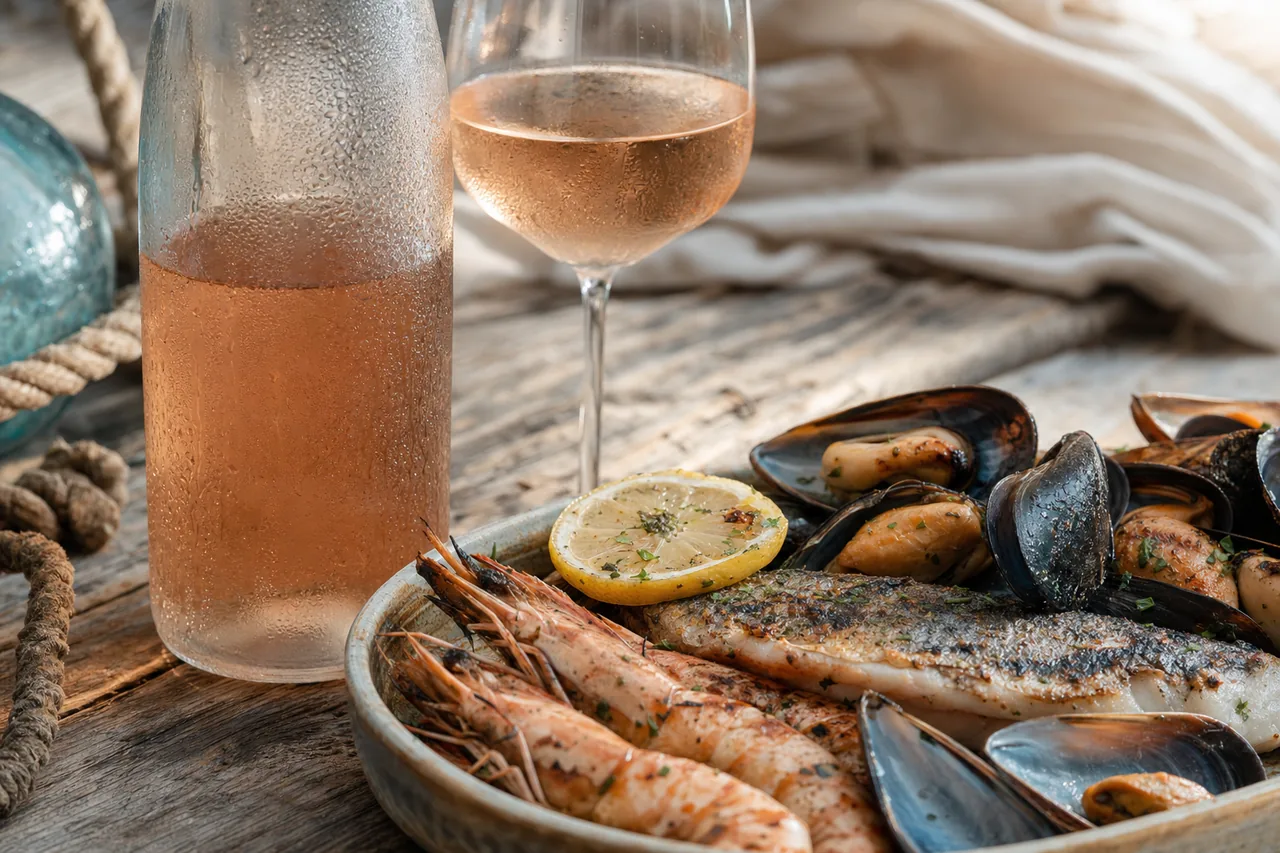
Rosé and seafood are a summer classic for one simple reason: rosé is fresh enough not to bury the delicate flavour of fish, and full enough to hold up against richer dishes like prawns and mussels. If you are hesitating over what to order with a seafood dinner in the heat, rosé is rarely a mistake.
Below is why the pairing works, which rosé goes with which seafood, what temperature to serve it at, and a few practical tips so you can choose calmly without being a sommelier.
Why rosé works with seafood
Rosé sits midway between white and red. From white it takes the freshness and acidity that clear the palate between mouthfuls, and from red a little more body and fruit character. That balance is exactly what makes it flexible.
Seafood is delicate and easily smothered by a heavy wine. The freshness of rosé acts like the lemon beside the fish: it lifts the flavour instead of hiding it. And its light body means it does not disappear alongside more heavily seasoned dishes, where a white sometimes vanishes.
There is a more technical reason too. A lot of seafood carries a light salinity and a mineral character from the sea. The acidity of rosé balances that salinity, while the fruit notes contrast pleasantly without clashing. So the pairing rarely rings false, unlike a heavy red with fish, which often leaves a metallic aftertaste.
And not least, rosé is a summer wine by temperament. It is drunk chilled, it refreshes in the heat and it does not weigh you down, which is exactly what you want at a seafood dinner when the food is light and the evening is long.
Which rosé with which seafood
Light, pale rosé
The driest and palest rosés, in the Provence style, go with the most delicate things: fresh white fish off the hot plate, oysters, light seafood salads. The idea here is for the wine not to take over.
Fuller, with more fruit
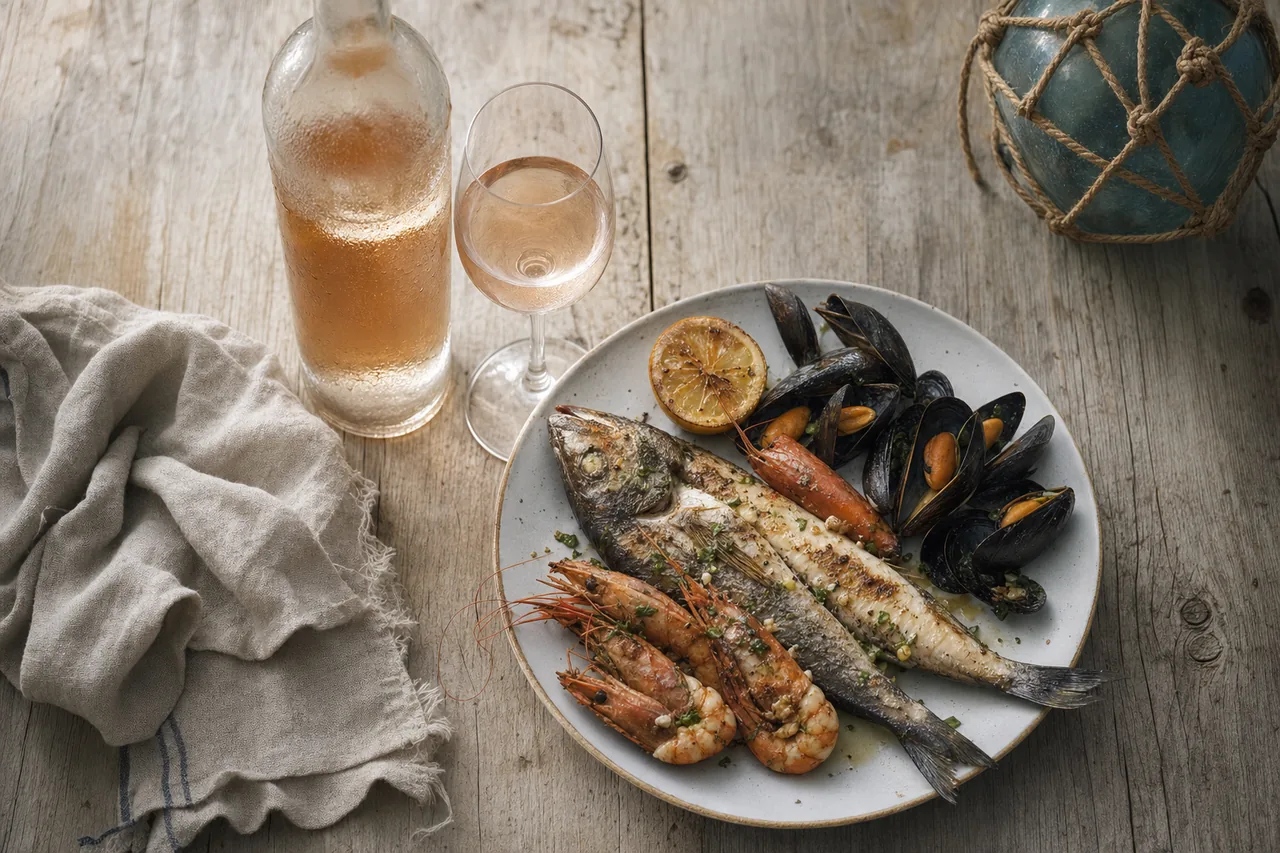
A rosé with deeper colour and more body handles richer and more seasoned dishes: grilled prawns, mussels in tomato sauce, fish with pronounced spicing. It has the backbone to travel with the flavour instead of melting away.
Sparkling rosé
To open the evening or to mark an occasion, sparkling rosé refreshes and sharpens the appetite. The bubbles clean the palate and go surprisingly well with fried seafood, breaded squid for example.
If you remember only one rule, make it this one: the richer or more heavily seasoned the dish, the fuller the rosé it can take. Delicate food wants a delicate wine, expressive food wants a wine with backbone. Start from that principle and you will rarely go wrong, even without knowing the particular labels.
Quick pairing reference
| Dish | Rosé style |
|---|---|
| White fish off the hot plate | light, dry, pale |
| Oysters and delicate salads | light, dry |
| Grilled prawns | fuller, fruity |
| Mussels in tomato sauce | fuller, fruity |
| Breaded squid | sparkling rosé |
| Mixed seafood | medium bodied, all-purpose |
Temperature and serving
Rosé is drunk chilled but not ice cold. Too cold and the wine closes up its aroma, too warm and it turns slack. The good range is around eight to ten degrees. In practice: take the bottle out of the fridge ten minutes or so before pouring, or keep it in a bucket of ice and water on the table.
Pour small measures and top up. Rosé warms quickly in the glass on a warm summer evening, and a smaller pour stays fresh to the last mouthful.
The glass matters too, though it is a small detail. A wider white wine glass gathers the aroma better than a narrow one, but it is not essential. For an unhurried dinner by the sea it matters more that the wine is properly chilled than that the glass is the perfect one.
How to choose in a restaurant
If you are at a seafood dinner and do not want to think about it for long, there is an easy approach. Decide the dish first, then the wine to go with it, not the other way round. Tell the waiter what you have ordered and that you want rosé, and leave the suggestion to them.
If you are at a shared table with different dishes, choose a medium-bodied rosé. It is flexible enough to travel with one person's fish and another's prawns. One all-purpose choice saves complications when the table is mixed.
And do not be swayed by the price on the label. A good pairing does not mean an expensive wine, it means a wine that sits well with the dish. Often a simpler rosé does the job better than an expensive one that was not made for this food.
A few myths cleared up
Rosé is not sweet by default. Most table rosés are dry, and the sweetness depends on the particular wine, not on the colour. A pale colour does not mean a weaker wine either, it usually means shorter contact with the grape skins.
And no, rosé is not only for summer. It simply makes most sense in the warm months, when seafood and chilled wine go together. But a fuller rosé holds up well on a cool evening with a more substantial dish.
From our kitchen
Rosé is among the most requested wines here in summer, and that is no accident. The Sea Terrace, the sunset and a glass of chilled rosé simply fit together, and the menu of the day almost always has a dish that sits well with it.
If you are not sure what to choose, tell us what you have ordered and we will suggest a rosé to complement it rather than overpower it. The idea is not to impress with a label, but for the food and the wine to work together while the sun goes down over the water.
Frequently asked questions
Which rosé is the most all-purpose for seafood?
A dry, medium-bodied rosé is the safest choice, because it goes with both delicate fish and richer dishes like prawns and mussels. If you are hesitating, start there.
Can you drink rosé with fried seafood?
Yes, and it is a good idea. The freshness, and sparkling rosé even more so, cuts through the fat and goes beautifully with breaded squid or prawns.
What temperature should rosé be served at?
Chilled, around eight to ten degrees. Take the bottle out of the fridge ten minutes or so before pouring, or keep it on ice at the table.
Is rosé sweet?
Most table rosés are dry. The sweetness depends on the particular wine, not on the pink colour.
Conclusion
Rosé and seafood belong together because the freshness lifts the fish while the light body still holds up against richer dishes. Choose the style to match the dish, serve it chilled, and you will rarely go wrong.
Ready for a summer seafood dinner with a glass of rosé? Book a table or look at the menu. It is also worth reading about the Sea Terrace, where rosé tastes best.