
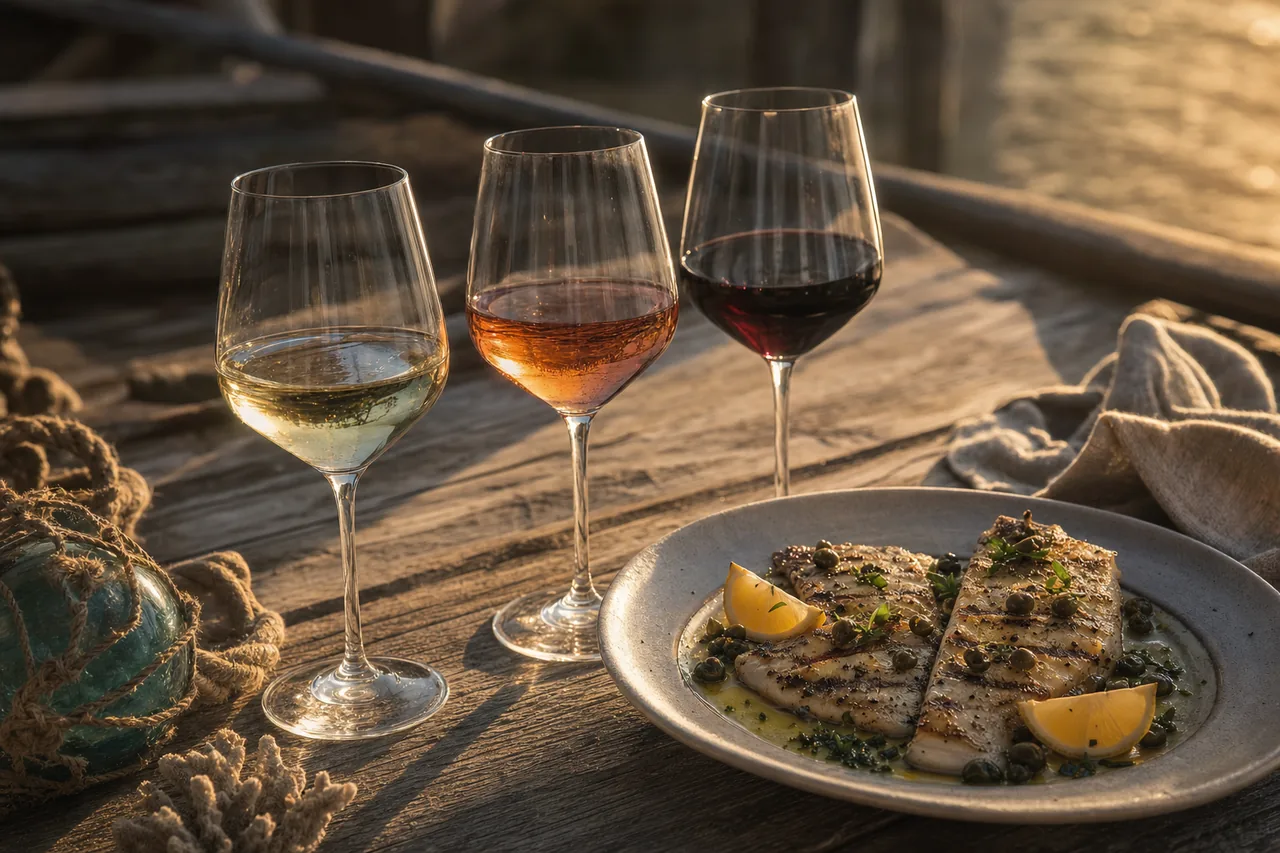
Choosing between white, rosé and red with fish has nothing to do with the colour of the fish and everything to do with how it is cooked and what sauce comes with it. A light white works with anything raw, cured or poached, rosé handles fried and fatty dishes, and red belongs only with oily fish off the grill or dishes built on tomato and meat sauces, and only if it is light and free of aggressive tannin.
The old rule, white with fish and red with meat, is convenient, but it gets it wrong often enough to spoil a dinner. Turbot on the grill with butter has nothing in common with fish soup, and lightly cured bonito calls for a completely different glass than fried calamari. Below is the logic the way we explain it at the table, including the three corrections that shape the choice more than the fish itself does.
The colour of the wine does not follow the colour of the fish
What actually decides
Three things determine the glass: the fat in the dish, the acidity already on the plate, and the intensity of the flavour. Oily fish needs a wine with enough acidity to clear the palate. A dish carrying lemon, capers or pickled onion already brings its own acidity and wants a wine that will not fight it. And the delicate flavour of white fish is smothered by any fuller wine, whatever its colour.
Why the rule exists anyway
The classic rule works because most fish is delicate and most red wine is tannic. Tannin and fish oil produce a metallic aftertaste that everyone has met at least once. The problem is not the red colour, it is the tannin. Remove the tannin and red wine suddenly becomes possible.
Which glass for which dish
| Dish | First choice | Also works | Avoid |
|---|---|---|---|
| Taramasalata, marinated fish | Dry sparkling | Light fresh white | Full oaked white |
| Cured bonito with sumac | High-acid fresh white | Dry rosé | Any red |
| Fried calamari, fried fish | Dry rosé | Sparkling | Sweet whites |
| Horse mackerel, small baked fish | Light white | Rosé | Full-bodied red |
| Turbot or calamari off the grill | Fuller white | Very light red | Tannic reds |
| Risotto and pasta with seafood | Full-bodied white | Dry rosé | Light neutral white |
| Fish soup, tomato sauces | Dry rosé | Light unoaked red | Sweet wines |
The table is a starting point, not a law. If you enjoy a wine and the dish does not fight it, you have made the right choice, whatever any table says.
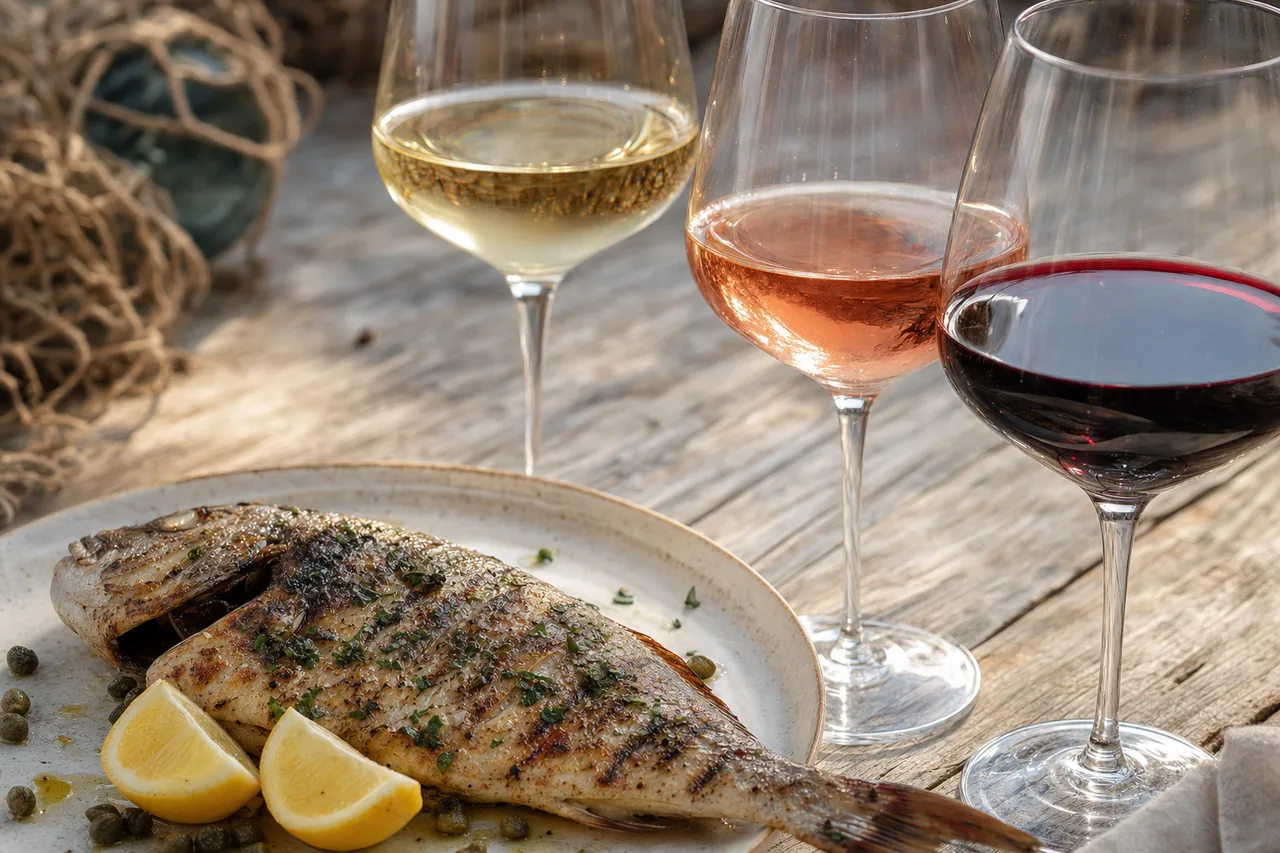
White: the safe choice and its limits
Light, fresh whites
Dry whites with pronounced acidity and a citrus profile are the safest choice with almost everything from the cold starters and with small Black Sea fish. They do not impose themselves, they leave the taste of the sea in front, and they work especially well when there is lemon on the plate. If you have no idea what to order and the company is mixed, this is the glass that will not go wrong.
Fuller whites
With seafood risotto, pasta with prawns or grilled fish finished in butter, a light white suddenly disappears underneath the dish. Here you need a wine with more body and texture, something that stands up to the fat. This is also where whites with a short stay in oak finally make sense, provided the oak is restrained and does not cover everything.
Rosé and sparkling in summer
Dry rosé is the most versatile answer for a summer table of seafood, because it sits exactly between the two extremes: it has the freshness of a white and a little of the structure of a red. That is why it copes with fried food, with tomato sauces and with a mixed platter where there is a bit of everything on the table. We have written separately about rosé and seafood if the subject interests you in more detail.
Sparkling wine, meanwhile, is the one everybody forgets, and it may be the best partner for anything fried and salty. The bubbles and the acidity cut through fat in a way no still wine can. A glass of dry sparkling with fried calamari changes quite a few minds about what to drink with fried food.
Red with fish: when it works and when it does not
When yes
Red has a place with oily fish off the grill, with dishes in tomato sauce and with the rapana kebab, which is to say whenever the plate carries more character than the fish itself. The condition is that the wine be light, chilled to around 14 degrees, and free of aggressive tannin. Light red varieties served cooler than usual do the job.
When no
Never with cured or marinated fish, with taramasalata, or with delicate white fish cooked gently. There red does not merely fail to fit, it actively ruins the flavour and leaves a metallic aftertaste. If someone at the table drinks red and nothing else, offer them a rosé rather than trying to convince them that the metallic aftertaste is a nuance.
The three corrections that change the choice
The sauce gives the orders, not the fish
The same turbot with lemon and with tomato sauce calls for two different wines. So the first question is not which fish you ordered but what comes with it. When in doubt, look at the strongest flavour on the plate and pick the wine for that.
The cooking method
Poached and steamed pull towards light whites. The grill and the plancha add a smoky character that carries fuller wines. Fried food wants acidity and bubbles. If you are curious how the season itself changes the flavour, see how the different Black Sea species behave through the year.
Serving temperature
White served too cold smells of nothing, and warm rosé goes flat. Whites and rosés are at their best at around 8 to 10 degrees, and light reds at around 14. In August, out in the open, a glass warms within minutes, which makes the ice bucket a necessity rather than a flourish. There is more on that in our piece on rosé and seafood.
From our kitchen
Mr. Baba is a galleon moored on the beach beside the Sea Station in Varna, and wine here is most often drunk outdoors, which changes a fair amount of the theory. On the Sea Terrace and the Upper Deck the evening starts warm, the wind comes off the water, and every bottle warms faster than you expect. That is why we tend to suggest two smaller bottles rather than one large one that will stand on the table for two hours.
The second observation is purely Black Sea. Horse mackerel and bonito are oily fish and almost always want more acidity in the glass than people expect, while turbot tolerates a fuller wine. A guest who has ordered cured bonito and reached for a full oaked white usually leaves half the glass. The same guest with a fresh, high-acid white finishes the bottle, without having changed the fish.
And one thing we say honestly at the table: the best pairing is the one the company will actually drink. If four people at the table drink only rosé, there is no sense in pushing two different bottles for the sake of one plate. Wine by the sea is part of the evening, not an exam. Tell the waiter what you have ordered and what you like, and the rest is our job.
Frequently asked questions
What wine with fish if there is meat on the table too?
A dry rosé or a light red without aggressive tannin is the best compromise, because it handles both. The other option is one bottle of each, if the company is large enough.
Can you drink red wine with fish?
You can, but only a light red, chilled, and only with oily fish off the grill or dishes in tomato sauce. With cured or marinated fish and taramasalata, red leaves a metallic aftertaste and is not recommended.
Which wine goes with fried calamari?
Dry sparkling or dry rosé. Both have the acidity that clears the fat, and sparkling adds bubbles on top, which works particularly well with anything breaded.
What temperature should white wine be?
Around 8 to 10 degrees. Colder than that and it loses its aroma, warmer and it turns heavy. In summer, outdoors, use an ice bucket, because the glass warms quickly.
Tell us what you ordered and leave the glass to us
These rules help, but they are no substitute for tasting. Pairing wine with fish is a question of balance rather than of fixed couples, and the quickest way to feel it is to order two different wines by the glass and compare them against the same dish.
Have a look at the galleon's menu to choose the fish, and we will pick the wine together on the spot, based on how it is cooked. If you are planning dinner on the terrace in August, book a table in advance, because the open decks fill up first at the height of the season.