
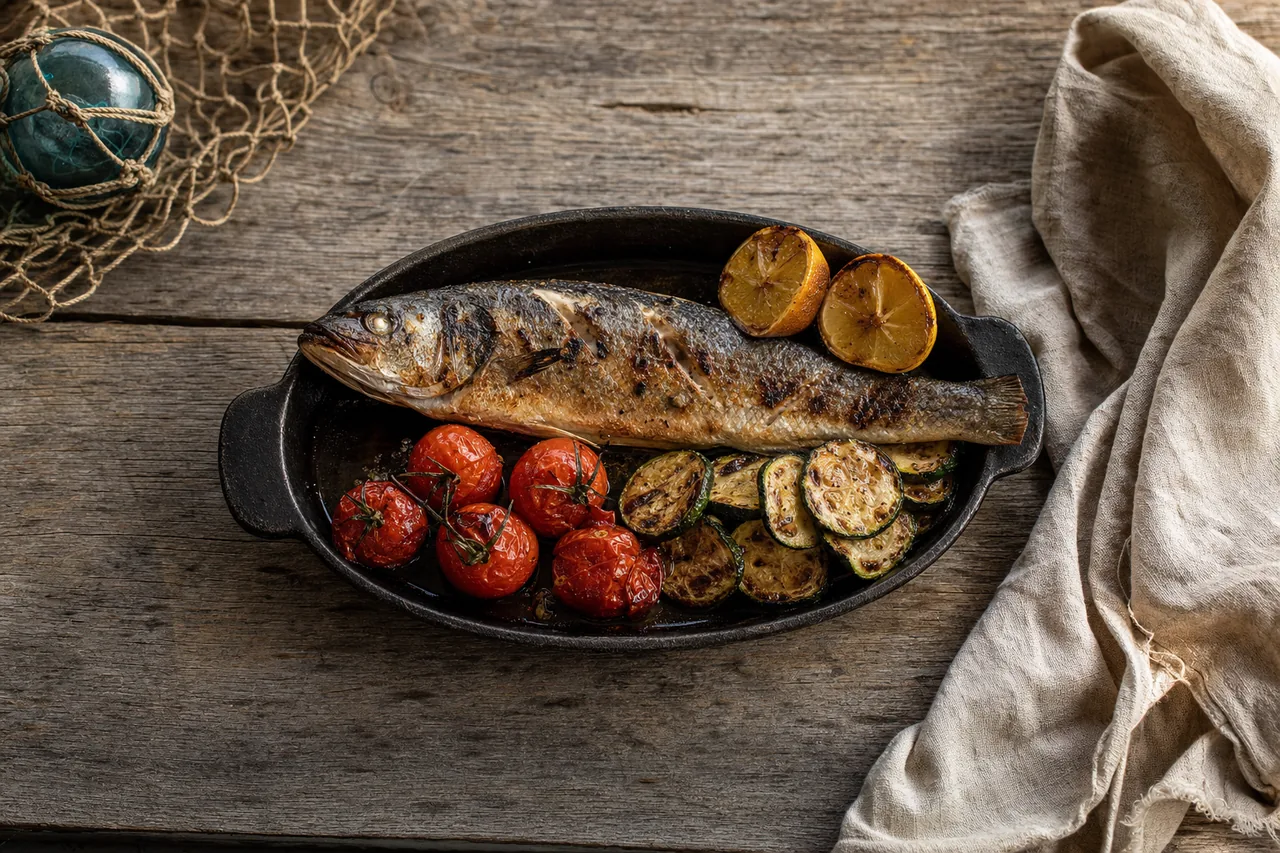
In August, a kitchen by the sea cooks whatever is at its peak right now: Black Sea horse mackerel and bonito, squid, mussels and rapana snails, and alongside them tomatoes, courgettes, aubergine and peppers, cooked fast on a hot plate or grill and finished with lemon rather than a heavy sauce. A summer menu is not richer than a winter one. It is faster, sharper and greener, because the temperature outside decides what the body actually wants.
Seasonality sounds like a marketing word until you stand at the fish counter at six in the morning. Then it becomes very specific: some fish are there, others are not, the tomato either smells of something or it does not. From that point the menu more or less writes itself. Below: what goes on the plate in August, and how to order the season instead of the catalogue.
What makes a menu seasonal
The season decides, not the chef
A seasonal menu means one simple thing: what is on it is decided by what is ripe right now, not by what can be delivered all year round. The difference is immediate. An August tomato has aroma, acidity and sugar, and holds its own on the plate with nothing but olive oil. The same tomato in February is decoration. So the summer list is built around a handful of ingredients at their peak.
Why the menu shrinks instead of growing
You would expect summer to bring more produce, and therefore a longer menu. In practice the opposite happens. An ingredient at its best needs very little handling and very little company on the plate. A long menu is a sign that the kitchen is leaning on its storeroom rather than on the market.
What the Black Sea gives in August
The fish at their best
The August counter in Varna is easy to recognise. Horse mackerel is small and firm, exactly right for cooking whole on the plate. Bonito is entering its strongest stretch and is oily enough to work both lightly cured as a starter and as a fillet with rosemary. Squid and rapana are at their peak, and mussels run all year. Which species is best when is covered separately in our piece on the fish of the Black Sea.
What is waiting its turn
Not everything good is a summer thing. Several of the fish Bulgarians rate most highly arrive with the first cold spells. So an honest summer menu has gaps in August, and those gaps are not an oversight. This is also where the line "ask your waiter about the fish of the day" comes in: not a fixed dish, but a space deliberately left open for the morning catch.
| Ingredient | When it is at its best | How we cook it in summer |
|---|---|---|
| Horse mackerel | June to September | Whole, on the plate, with lemon and nothing else |
| Bonito | August to October | Lightly cured with pickled onion and sumac, or as a fillet with rosemary |
| Squid | Summer is its peak | On the plate with capers and lemon, or fried |
| Rapana | The warm months | Rapana kebab |
| Mussels | All year, meatier when it is cool | With thyme and garlic, or plain |
| Tomatoes | July to September | Raw, with buffalo cheese, pesto and olives |
| Courgettes | June to August | On the plate with cheese and mint |
| Aubergine | July to September | Stuffed with vegetables and cheese |
| Peppers | August to September | Sivriya peppers in a pink tomato sauce |
Vegetables run half the plate
The tomato does the heavy lifting
In August the tomato does the job that a sauce does in winter. It brings acidity, sweetness and water at once, which means almost nothing else is needed next to it. A pink tomato with lightly salted buffalo cheese, house pesto and olives is a dish in its own right, not a side. The same logic sits behind the village salad with garden vegetables.
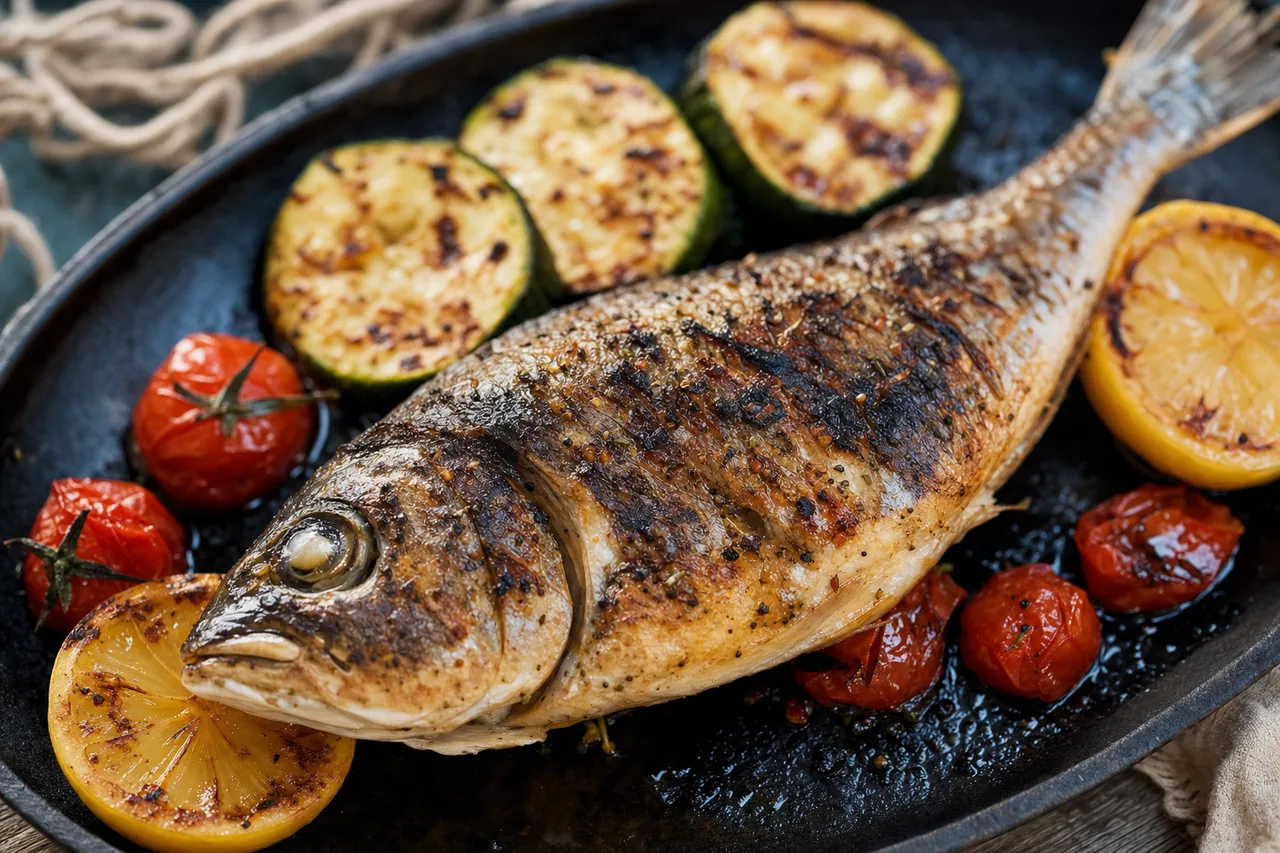
Courgettes, aubergine and peppers
The three workhorses of the August plate all take high heat well, which is exactly why they are so useful in summer. Courgette on the plate with cheese and mint is out in minutes and stays light. Aubergine stuffed with vegetables and cheese is substantial enough to serve as a main for a guest who does not eat meat. Sivriya peppers in pink tomato sauce may be the single most seasonal item on the whole list.
How summer changes the technique
The hot plate instead of the oven
In summer almost everything goes over a hot plate or a grill. The reason is not fashion but physics: a hot surface seals the fish quickly, the juices stay inside and the dish reaches the table in minutes. This matters most with small fish and with squid, which turn rubbery when cooked slowly. We go into that in detail in our piece on squid, octopus and cuttlefish.
Less sauce, more acidity
The second big summer rule is acidity. Lemon, capers, pickled red onion, sumac and vinegar do the work that butter and cream do in winter. The result is a plate that refreshes instead of weighing you down, and one that works far better with a glass of cold white or rosé. On matching the glass to the plate, we have a separate piece on white, rosé or red with fish.
The cold side of the summer menu
Starters and salads
In the heat, the first plate is almost always cold. Taramasalata with Greek flatbread, lightly cured bonito with pickled onion and sumac, a courgette and carrot spread, a seafood salad: all of it lets the table start slowly while the hot plate does its work. It also suits a group of six or eight, because everything is shared and nobody is left waiting.
Soup does not disappear
Summer does not banish soup, it changes what kind. Tarator, the cold cucumber and yoghurt soup, is the obvious choice on the hottest days. Fish soup stays on the list all year, because at dinner by the water, once the breeze picks up after sunset, it suddenly becomes exactly the right thing.
From our kitchen
The galleon on Kraybrezhna Aleya works differently from an ordinary dining room, and that shows most clearly in summer. The Sea Terrace and the Upper Deck are open from May to October, and the Captain's Bridge on the third level hangs directly over the water. In August, dinner up there starts around eight, as the sun drops, and the temperature on the deck falls by several degrees within half an hour. That is why guests upstairs order differently from guests in the Main Hall: more cold starters to begin with, more fish off the plate afterwards.
In the kitchen the day starts at the market, not at the menu. The rule here is a single one and has not changed since 2005: the fish gives the orders, not the chef. If there is good horse mackerel in the morning, it goes on as the fish of the day and is cooked whole. If the turbot is good, it goes into garlic olive oil and is sold per 100 grams, because no two are the same size. In August we serve more rapana than in any other month, and we keep mussels in smaller batches, because at this temperature freshness is measured in hours, not days.
There is one practical detail the terrace taught us: in August, lunch and dinner are two different kitchens. At lunch almost nobody wants anything rich, so it is salads, tarator and something off the plate. After nine, tables sit for two and three hours, and that is when the platters and the mussels start moving.
What to order, by time of day
Lunch in the heat
For lunch in the hottest part of the day, cold plus hot plate is the combination that works: tarator or a village salad, then courgettes off the plate or some small fish. Portions stay light. If you are with children, the children's menu covers both white fish fillet and chicken.
A long dinner on the deck
In the evening the logic reverses. You start with a few starters to share, move through mussels or squid, and the main is the fish of the day or octopus. For a larger group or a specific occasion, look at catering and events rather than counting on a free table on a peak Friday in August. The current list with prices in euro is in our summer menu.
Frequently asked questions
When exactly does the summer menu change?
The summer list comes in at the start of the active season and stays until autumn, but it has moving parts inside it. The fish of the day changes daily with the catch, and the vegetable dishes move with the market.
Is it worth asking what is fresh today?
It is, and it is the single most useful question you can ask. The waiter knows what arrived that morning. The line "ask your waiter about the fish of the day" is not a courtesy, it is the mechanism by which the morning catch reaches the table that evening.
What if I do not eat fish?
The vegetarian section of the summer menu is not a token one. Celery steak with a herb salad, sweet potato and spinach risotto, stuffed aubergine and vegetables off the plate all work as a full main. There are meat dishes too, if the group is mixed.
Is seasonal cooking more expensive?
Usually the opposite. An ingredient in its season is the cheapest and the best at the same time, because there is plenty of it. Cooking out of season costs more, because the same thing has to travel thousands of kilometres.
The sea writes the menu, every morning from scratch
If you take one thing from all of this, let it be this: in August, order the simple things. A whole small fish off the plate, tomato with cheese, courgette with mint, a glass of cold white. The season does eighty percent of the work, and the kitchen only has to stay out of its way.
August evenings on the terrace fill up early, especially on Fridays and Saturdays. Book a table ahead and say which level you would like, because the Sea Terrace, the Upper Deck and the Captain's Bridge offer three rather different evenings on the same ship.