
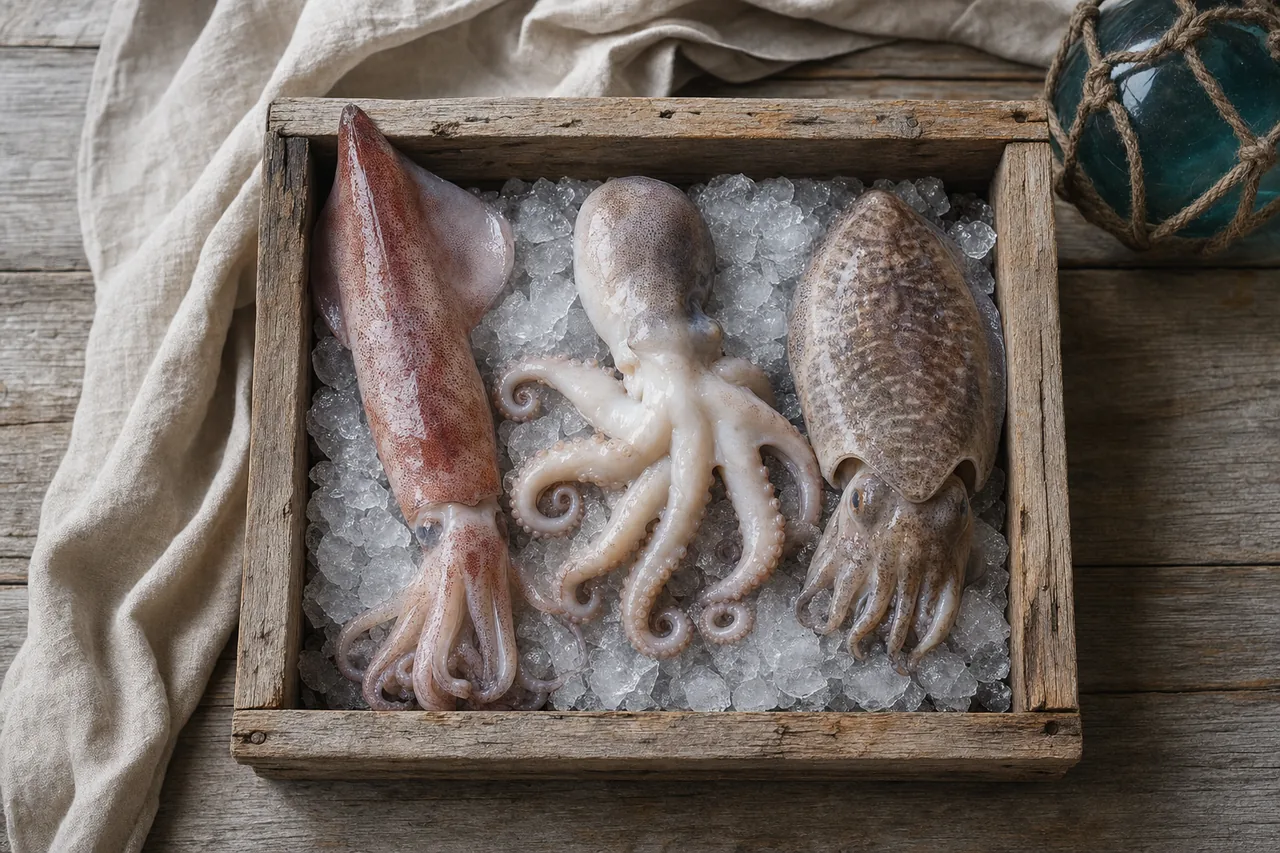
Squid, octopus and cuttlefish get confused constantly, but they are three different creatures with three different flavours and three different ways of cooking. In short: squid is the most delicate and cooks fast, octopus needs long, slow cooking to become tender, and cuttlefish sits in between, denser than squid and softer than octopus.
Below is how to tell them apart, why each demands a different approach in the kitchen, and the one simple mistake that turns their flesh to rubber. If you have ever wondered why your squid ends up chewy, the answer is here.
How to tell them apart
Squid
An elongated, arrow-shaped body with a triangular fin at the tip, ten tentacles of which two are longer. The flesh is thin, white and delicate. This is the most common of the three on our menus, because it cooks easily and quickly.
Octopus
A round head, eight tentacles with rows of suckers, no internal bone. The flesh is denser and more muscular, with a more pronounced flavour. That musculature is exactly what makes octopus demanding: raw, it is tough and needs particular treatment.
Cuttlefish
A wider, oval body with an internal chalky bone, the cuttlebone everybody recognises. It has ten tentacles like squid, but the flesh is thicker and denser. Cuttlefish is also the source of the classic black ink that colours risotto and pasta.
Quick reference
| Feature | Squid | Octopus | Cuttlefish |
|---|---|---|---|
| Body | elongated, with a fin | round head | oval, wide |
| Tentacles | 10 | 8 | 10 |
| Flesh | thin, delicate | dense, muscular | moderately dense |
| Cooking | fast | long and slow | medium |
| Flavour | delicate | pronounced, of the sea | in between |
The golden rule: fast or slow, nothing in between
There is one rule that applies to all three: cook them either very fast or very slowly. The middle is the trap where the flesh toughens and turns rubbery.
With brief cooking, a couple of minutes over high heat, the proteins tighten but have no time to set hard, and the flesh stays tender. With long cooking, tens of minutes up to an hour, the connective tissue breaks down and the flesh softens again. Between those two zones lies no man's land, where squid turns to rubber. That is why breaded squid is fried for a minute and octopus is simmered at length before it ever meets the grill.
The reason lies in the structure of the flesh. Cephalopods are almost pure muscle, with a lot of collagen and little fat. Under moderate heat the collagen contracts and squeezes out the moisture, and the flesh tightens like a rubber band. Only the two extremes save it: brief enough that the collagen has no time to react, or long enough that it turns to gelatin and softens again.
In practice this means the clock matters more than the recipe. One minute too many on squid, or fifteen minutes too few on octopus, is the difference between tender and tough. When you cook a cephalopod, watch the time more strictly than you would with fish.
How each one is cooked
Squid: fast and hot
Squid loves strong, brief heat. On the plancha or the grill it takes a minute or two, and breaded squid fries just as quickly. Overcooking is the most common mistake made with it.
Octopus: tender first, grilled after
Octopus is almost always cooked in two stages. First it is simmered at length until tender, then finished on the grill or the plancha for crust and aroma. Skip the first stage and the grill alone will not soften it.
Cuttlefish: in between, but carefully
Cuttlefish tolerates both fast and slow cooking, but it too punishes the middle. It works well on the plancha, braised in its own ink, or in stews, where slow heat suits it.
Freshness: what to look for
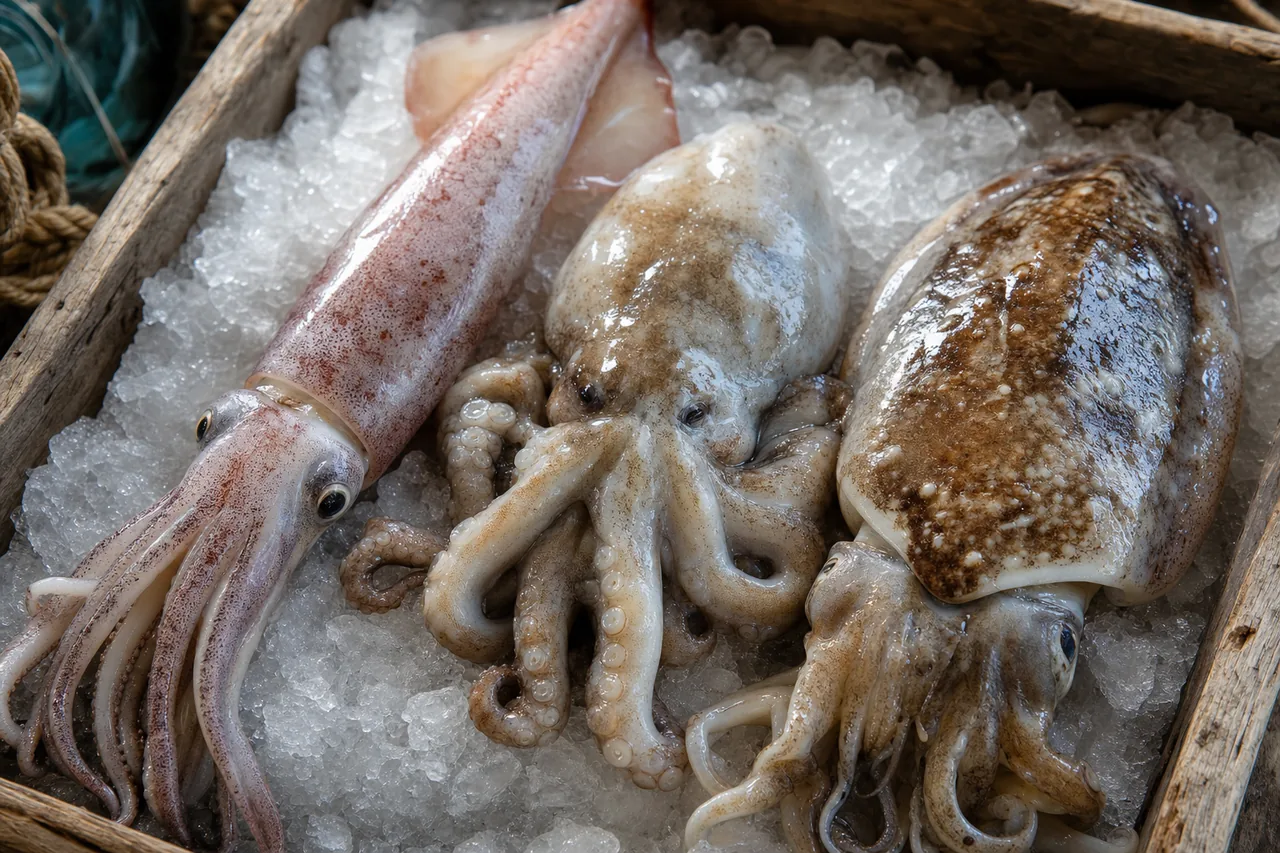
A fresh cephalopod smells of the sea, not of ammonia. The flesh is firm and slightly translucent, with a moist sheen, rather than sticky or dull. On octopus the skin is smooth and intact, on squid the body is firm and does not fall apart. Frozen and properly stored, all three stay good, provided they have not been thawed and refrozen.
One simple sign: the more neutral the smell and the cleaner the sheen, the fresher it is. A heavy smell is always a sign of age, exactly as it is with fish.
There is a small point about size too. Smaller squid and octopus are usually more tender than large ones, because their musculature is less developed. A large octopus is not worse, but it needs even more time to soften. If you are cooking one at home for the first time, start with a smaller specimen, which forgives mistakes more readily.
From our kitchen
All three appear on our menu, because each has its place. Breaded squid is a quick, crisp starter, octopus demands more time and more respect, and cuttlefish goes in where we want a denser taste of the sea. We do not cook them the same way precisely because they are not the same thing.
The logic of the ship applies here too: quality comes from freshness and the right method, not from elaborate tricks. A fresh cephalopod cooked in the right zone, fast or slow, needs nothing more to be good.
Frequently asked questions
Why does my squid turn rubbery?
Almost always because it was cooked too long, but not long enough. Squid wants either a minute over high heat or a long braise. The middle is what makes it rubbery.
Does octopus have to be beaten to become tender?
Rarely these days. Long, slow simmering before the grill does the same job. Fresh octopus, properly simmered, becomes tender without any pounding.
What is the difference between squid and cuttlefish?
Squid is elongated, with thin, delicate flesh, while cuttlefish is wider, has an internal bone and denser flesh. Cuttlefish is also what produces the black ink.
Can the three be swapped in a recipe?
To an extent, but not during the cooking. If you replace squid with octopus, you have to change the method too, otherwise the result is tough.
Conclusion
Squid, octopus and cuttlefish are three different things, but one rule unites them: fast or slow, nothing in between. Tell them apart by the body and the tentacles, match the method, and you will rarely go wrong.
Want to try them cooked properly? See the menu or book a table. Another useful read is how to tell fresh fish.