
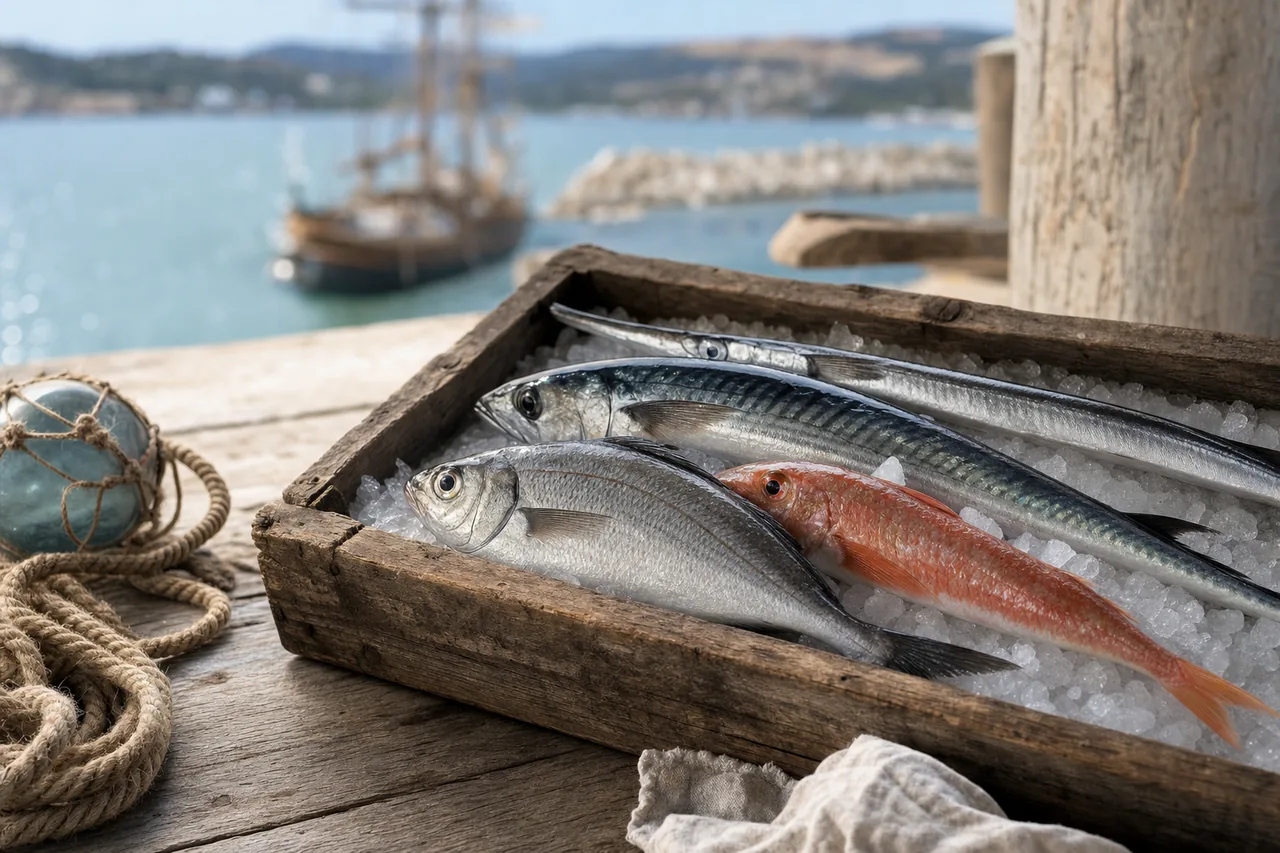
The Black Sea gives up different fish in different months. In short: sprat and garfish in spring, horse mackerel, red mullet and anchovy in summer, bonito and bluefish in autumn. Turbot is a spring fish with a legal closed season for part of the year.
Below we go through the main species, when each is at its best and why that shows on the plate. The season is the first and cheapest quality check there is, before you have even looked at the fish.
Why the season changes the flavour
Fish is not the same all year round. Its fat content shifts depending on whether it is feeding, spawning or migrating. That fat is exactly what carries the flavour and keeps the flesh succulent rather than dry.
Before its winter migration, for instance, bonito builds up reserves and becomes noticeably oilier and more aromatic. Conversely, fish caught straight after spawning is exhausted and its flesh is poorer. So the same fish, cooked the same way, can be a revelation in September and a disappointment in May.
Fat also decides how it should be cooked. Oily fish in season stands up to strong dry heat, because its own fat protects it: grill, plancha, oven. Lean or out-of-season fish dries out under the same treatment and usually behaves better in a pan, in a sauce or gently braised. So the season does not only determine whether the fish is good, it determines which method is worth using at all.
There is a practical side too. In its season a species is caught in quantity, which brings the price down and pushes the freshness up, because the journey from the boat to the kitchen is short. Out of season the same fish comes from far away, passes through more hands and costs more in order to taste less good.
The fish by season
Spring
The season of sprat, small, oily and perfect eaten quickly. At the same time garfish appears with its distinctive long beak and greenish bones, which alarm people needlessly, because its flesh is tender and delicate.
Spring is also the time of turbot, the most expensive Black Sea fish. Here a legal closed season applies for part of the period, usually between mid-April and mid-June, to protect spawning.
Summer
The most varied season. Horse mackerel has dense flesh and is versatile enough for the grill, the pan and the plancha. Red mullet is small but delicate and faintly sweet, and is considered a delicacy. Anchovy arrives in shoals and is a classic for quick frying.
Summer is also the season for goby, which rarely reaches restaurant menus but is the backbone of home Black Sea cooking and of fish soup.
Autumn
The most anticipated season along our coast. Bonito passes in shoals through September and October, having built up fat before migrating, and that is the moment it is at its finest. Bluefish is the other autumn fish, predatory, with denser and more distinctive flesh.
Autumn is also a good time for grey mullet, which is hardy and found almost year round, but tastes better in the cooler months.
Winter
A leaner season, resting mainly on sprat and on frozen autumn catch. If someone offers you "fresh bonito" in January, that deserves one more question, because its season ended months earlier.
Quick reference by species
| Fish | At its best | Character |
|---|---|---|
| Sprat | spring and winter | small, oily, for frying |
| Garfish | spring | tender, greenish bones |
| Turbot | spring | dense white flesh, a delicacy |
| Horse mackerel | summer to early autumn | versatile, dense |
| Red mullet | summer to early autumn | small, delicate, sweet |
| Anchovy | summer | small, arrives in shoals |
| Goby | the warm months | the base of fish soup |
| Bonito | September and October | oily, aromatic |
| Bluefish | autumn | predatory, distinctive |
| Grey mullet | autumn and winter | hardy, denser |
The closed seasons are not a formality
Some species have periods when fishing is restricted or banned outright, to protect breeding. The best known case is turbot, but restrictions exist for other species too, and the rules are updated.
For you as a guest this means one simple thing: if somewhere offers you a fish precisely during the period when it should not be caught, that tells you something about where it came from. A restaurant that cares about its suppliers will take the dish off the menu rather than serve it.
The bans are not bureaucracy. The Black Sea is a closed basin with low salinity and relatively poor species diversity, which makes it sensitive to overfishing. A few strong seasons without limits are paid for with years of weak catches afterwards. That is why the closed periods coincide with spawning, when one fish caught means a whole generation lost.
The season is the first check, the inspection is the second
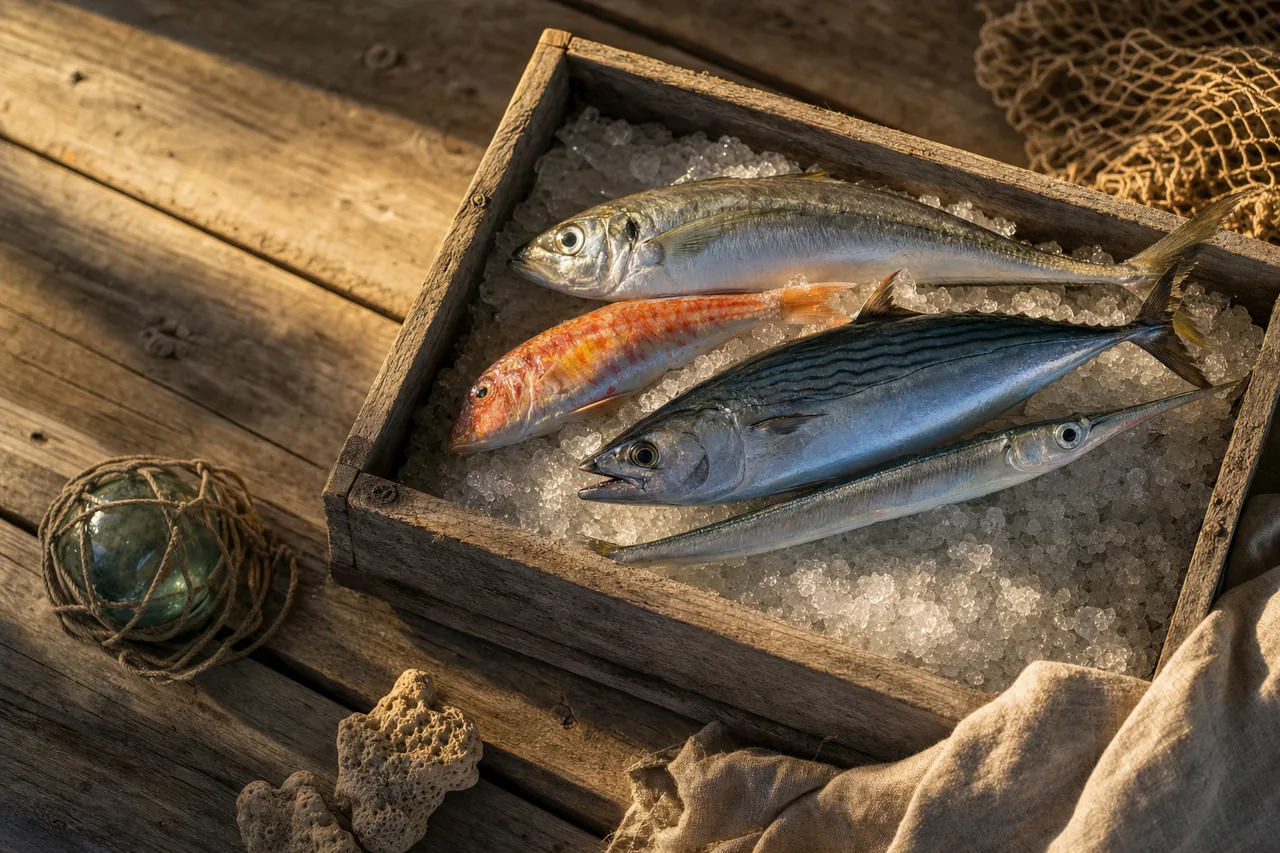
The season tells you whether the fish could plausibly be local and fresh at all. From there the inspection decides: a clear bulging eye, deep red gills, a smell of the sea and firm flesh that springs back under pressure.
The two checks work together. Fish in season but with cloudy eyes has been sitting. Fish that looks impeccable but is out of its season has most likely been frozen or imported. We have written about the inspection in detail in how to tell fresh fish.
From our kitchen
We work to this calendar every day. That is why we have a "fish of the day": the catch sets the menu, not the other way round. When turbot is under a closed season it is simply not on the board, and in September bonito comes forward, because that is when it is at its best.
It is also why we do not promise a specific species all year round. A galleon beside the Sea Station in Varna has guests who know fish at least as well as we do, and they would spot the discrepancy immediately.
Frequently asked questions
Which is the tastiest Black Sea fish?
It depends on the season. Turbot is considered the most prized, but in September and October few things beat freshly caught bonito. Red mullet is the favourite for those who prefer a more delicate flavour.
Is there fish that is caught all year round?
Grey mullet and goby are found almost throughout the year, but even they have months when they taste better. The other species follow clearly defined seasons.
Is frozen Black Sea fish bad?
No. Fish frozen quickly after being caught in its season is often better than "fresh" fish out of season that has travelled a long way. What matters is that it was frozen once and properly.
Why do the prices move around so much?
Because they depend on the catch. A few days of bad weather keep the boats in and supply falls. That is why seasonal dishes appear and disappear from menus.
Conclusion
The Black Sea has a clear rhythm: sprat and garfish in spring, horse mackerel and red mullet in summer, bonito and bluefish in autumn. Follow that calendar and you will rarely go wrong.
And if you would rather someone else kept track of the catch for you, see the menu or book a table. Another good read on the subject is what we cook in August by the sea.