
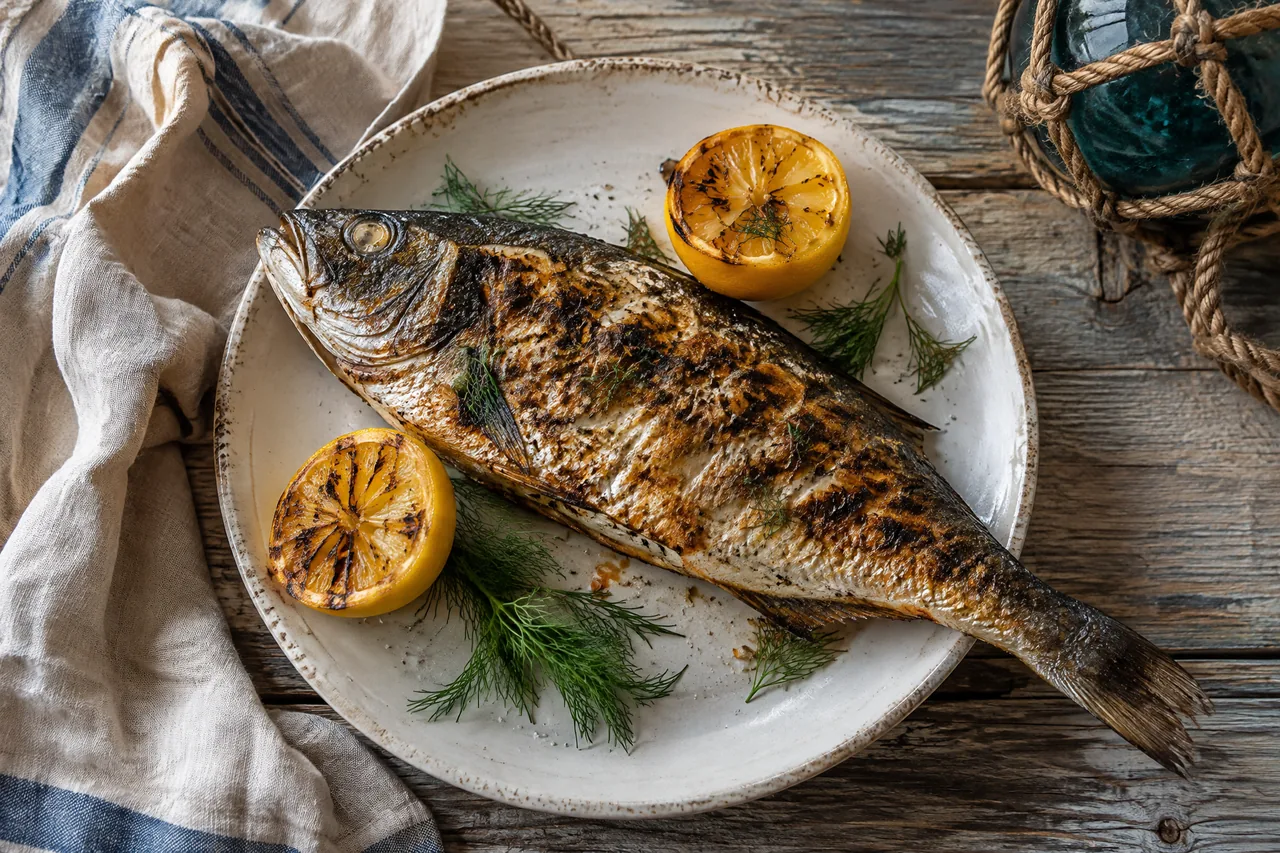
Catch of the day means a whole fresh fish from that morning's landing, bought the same day and served only while it lasts, which is exactly why it is never printed in the menu. In our menu it appears as a single line in the Fish section: ask your waiter about the catch of the day. It is priced per 100 grams rather than per portion, because no two fish weigh the same. Turbot, for example, runs at 8.99 € per 100 grams, so a fish of roughly 300 grams comes to about 27 €.
For a guest, this is at once the best and the most awkward item on any seafood menu. Best, because it is the freshest thing in the kitchen that evening. Awkward, because you cannot read about it in advance, compare it against something else, or picture what will arrive. What follows is everything you would otherwise have to ask at the table: who chooses the fish, how the price is worked out, what tends to appear in which months, and the questions that let you order it with confidence.
What does catch of the day actually mean?
The short definition
Catch of the day is one specific fresh fish from that day's landing, announced out loud and served until it runs out. It is not a promotion and it is not a recipe. It is raw material: a particular species, a particular weight, cooked simply, usually whole on the griddle or the grill with olive oil, lemon and salt. Because the fish stays whole and on the bone, the flavour holds better than it does in a fillet.
What catch of the day is not
Catch of the day is not a frozen fillet on discount, and it is not a permanent menu item wearing a different name. Three things tell them apart: the fish is whole, it is weighed in front of you or announced with its weight, and it runs out during the evening. If the same daily special appears week after week and is always available, you are almost certainly looking at a standard listing rather than a daily landing.
Why is the catch of the day not printed in the menu?
Because a landing cannot be planned
The catch of the day is not printed because nobody knows in advance what the market will hold at six in the morning. Weather, wind and the state of the sea decide whether the boats go out at all and what they bring back. A printed item promises availability every single day, and genuinely fresh fish cannot make that promise without passing through a freezer first, at which point it has become a different product altogether.
Because seasons and closures move the species around
Legal restrictions also shift which species can appear on any given day. Bulgaria's Executive Agency for Fisheries and Aquaculture enforces a 60 day closure on turbot fishing from 15 April to 15 June, while the fish is spawning, and during that window the catching, retention on board, landing and first sale of turbot are all suspended. Fresh Black Sea turbot therefore does not exist in May, and should not be offered to you. By August it is back in its normal season.
Who chooses the catch of the day, and on what basis?
The choice is made in the morning, in person
The catch of the day is chosen by the kitchen early in the morning and judged by eye and by hand, never from a description on a list. Four signs decide it: a clear, bulging eye, bright red gills, firm flesh that springs back when pressed, and a smell of sea rather than a smell of fish. The full checklist is in our guide on how to tell fresh fish.
Quantity is part of the decision
Choosing the catch of the day also means deciding how much of it to buy, and that matters more than it sounds. Fresh fish is not bought as a stockpile, because in August its freshness is measured in hours rather than days. A smaller batch means the item may well be gone by eleven at night. It also means that whatever reaches the table at eight is in the condition it was in that morning.
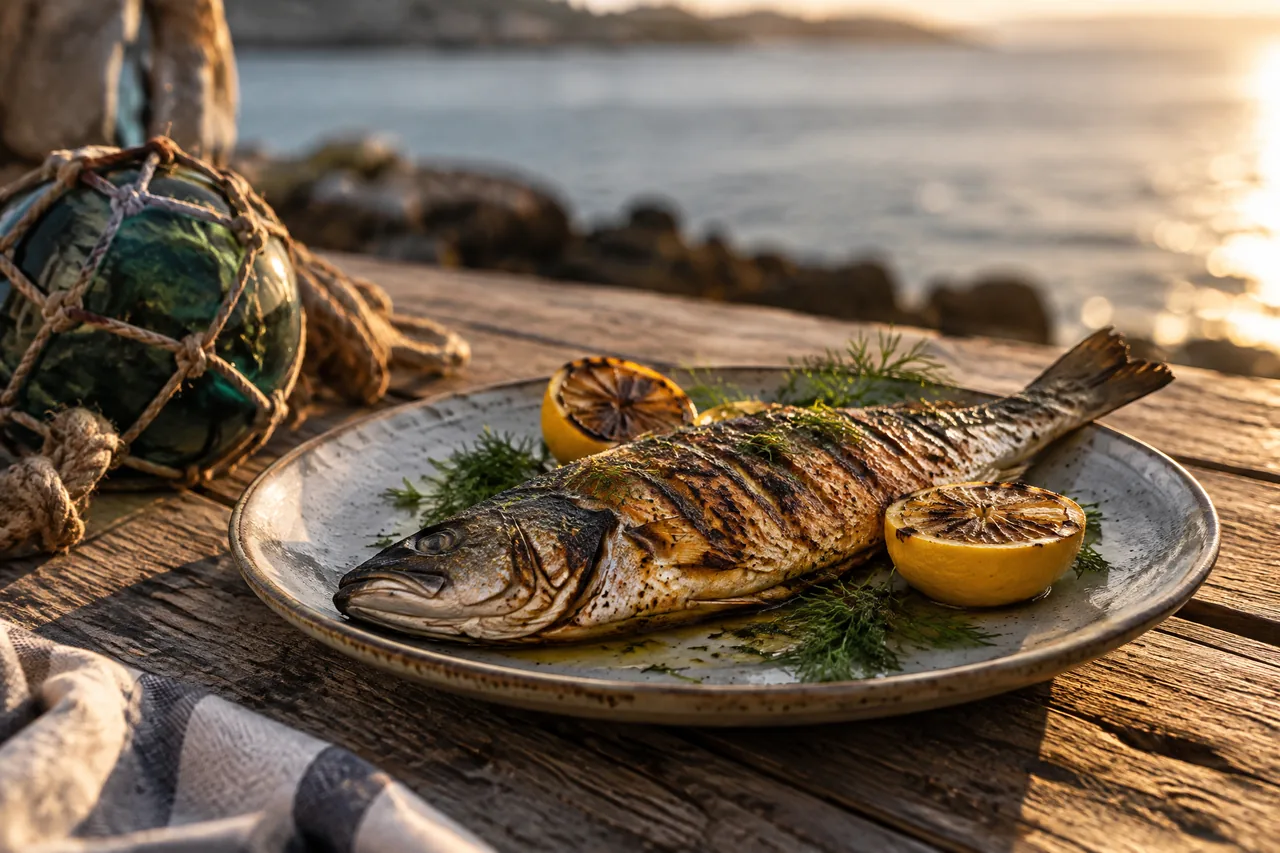
How much does the catch of the day cost, and why per 100 grams?
A rate by weight, not a fixed portion price
The catch of the day is charged per 100 grams because every fish weighs something different and cannot be divided into standard portions. Our turbot is 8.99 € per 100 grams, which works out at roughly 27 € for a 300 gram fish and around 45 € for a half kilo specimen. The fixed weight items give you a sense of the range around it: horse mackerel at 250 grams for 9.99 €, bonito fillet with rosemary at 220 grams for 12.99 €, and griddled sturgeon at 250 grams for 15.29 €.
How to avoid a surprise on the bill
One question before you order settles the bill entirely: how much does this fish weigh, and what does that come to at the per 100 gram rate. A waiter should show you the fish and tell you its weight before it goes anywhere near the kitchen. If the fish is a large one, order it for two people and add a side, rather than taking one main course each.
Which fish can be the catch of the day in which month?
The Black Sea calendar
The catch of the day changes with the season and moves through several clear periods across the year. This year has been more generous than usual: according to the Executive Agency for Fisheries and Aquaculture in June 2026, horse mackerel landings for the first five months of the year rose by 200 percent against the same period the year before, and scorpion fish landings were three times larger. Which species surface when is covered in detail in our piece on the fish of the Black Sea.
| Period | What you are likely to hear | How it is usually cooked |
|---|---|---|
| June to September | Horse mackerel, squid, gobies | Whole on the griddle, with lemon |
| August to October | Bonito | Lightly salted as a starter, or fillet on the griddle |
| June to March, outside the closure | Turbot | In garlic olive oil, priced per 100 grams |
| Autumn and winter | Horse mackerel, anchovy, sprat, scorpion fish | Fried or griddled, for sharing |
| 15 April to 15 June | No turbot at all | Fishing and first sale prohibited |
How do you order the catch of the day without getting it wrong?
Four questions for your waiter
Ordering the catch of the day confidently comes down to four questions: which species is it, where is it from, how much does it weigh, and how will the kitchen cook it. The answers take under a minute and settle nearly everything. If the fish is Black Sea and whole, leave it on the griddle and do not go looking for a sauce. If someone at the table dislikes bones, ask for it to be filleted in the kitchen before it is served.
What to order around it
The catch of the day takes very little company, and that is deliberate. One cold starter and a salad to share is enough: lightly salted bonito with pickled red onion at 5.49 €, or fish soup at 6.19 €, both do the job without filling anyone up. Wine is chosen by the cooking method rather than by the species, and the pairing table by dish is in our piece on white, rosé or red with fish. The full card with prices in euro is in our summer menu.
From our kitchen
The galleon on the seafront promenade in Varna has been running since 2005, and the catch of the day is probably the only item that has not changed since. Five rooms across three levels, around 280 seats, with the Sea Terrace and the Upper Deck open from May to October. We have printed exactly one sentence about the catch of the day, because everything else about it changes daily.
In the kitchen the rule has stood from the beginning: the fish gives the orders, not the cook. Our head chef Lyubomir Stefanov, a cook of 32 years who was with us before the ship was even built, puts it more briefly: I do not change the fish, I only clear its path to the table. In practice that means a good horse mackerel goes whole onto the griddle and gets eaten with your hands. A good turbot goes into garlic olive oil and gets weighed at 100 grams a time, because no two turbot are the same size.
There is one detail guests rarely expect. Sometimes the answer to what is the catch of the day is that today there isn't one. That happens in bad weather, when the boats have not gone out, and it is a more honest answer than serving you something defrosted under the same name. On an evening like that the waiter will point you towards a fixed weight dish instead, and there is nothing unusual about it.
Frequently asked questions
What does catch of the day mean in a restaurant?
It means whole fresh fish from that day's landing, bought the same morning and served only while it lasts. It is not printed in the menu because the species and quantity change every day, so the waiter announces it out loud.
Why is the catch of the day priced per 100 grams?
Because every fish weighs something different and cannot be split into identical portions. Our turbot is 8.99 € per 100 grams, so a 300 gram fish comes to roughly 27 €. The weight is always stated before you order.
Is there a catch of the day every single day?
No. In bad weather the boats do not go out, and on those evenings there is no catch of the day. The kitchen then serves fixed weight dishes instead, such as horse mackerel at 9.99 € or griddled sturgeon at 15.29 €.
Can I reserve the catch of the day in advance?
A specific species cannot be reserved, because it depends on the morning market. For a large group we can plan ahead and buy a bigger quantity, provided you tell us when you book.
Is there a catch of the day in May?
There is, but it will not be turbot. The turbot closure runs from 15 April to 15 June, so other Black Sea species appear during that window, most often horse mackerel and gobies.
Conclusion
The catch of the day is whole fresh fish from the morning landing, announced out loud and charged per 100 grams because no two specimens are alike. Ask the species, the origin, the weight and the cooking method, and ordering it becomes straightforward. If you want it the way it is meant to be eaten, off the griddle and on a deck above the water, book a table on the galleon and leave the choice to the morning market.