
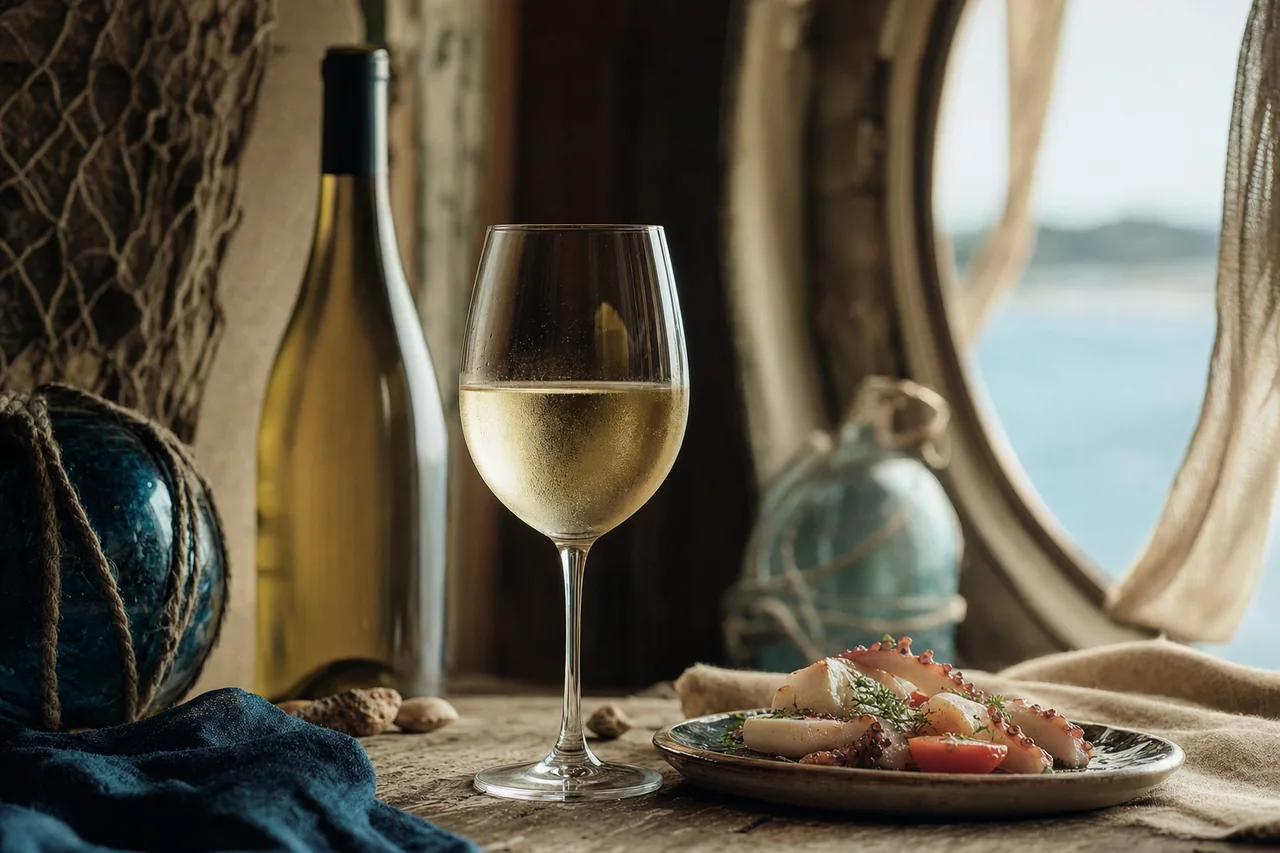
Tasting wine is five steps in this order: look, swirl, smell, taste, finish. It takes less than a minute per glass and requires neither training nor vocabulary. The difference between drinking wine and tasting wine is only that you pause for a few seconds and pay attention before you swallow.
Below are the five steps with what exactly to look for in each, serving temperatures by type, the most common mistakes, and answers to the questions people actually ask, including whether you should spit and how many wines you can taste at once without losing your palate.
What is wine tasting?
Wine tasting is a sensory assessment using sight, smell and taste, where the aim is to read what is in the glass rather than simply judge whether you like it. It works the same way with white, rosé, red and sparkling. The more wines you go through deliberately, the more easily you recognise grape, region and age, but that is a side effect, not a requirement for starting.
One important distinction: liking is personal and not open to argument, while describing is technical and can be practised. Two people can describe the same wine almost identically and still one of them likes it and the other does not. Tasting trains the describing.
How do you taste wine in five steps?
1. Look
Tilt the glass against a white surface and look at the rim of the liquid. Colour hints at age and body: whites darken towards gold over the years, while reds lighten towards brick. Clarity is a given these days, and the legs running down the sides show alcohol and sugar, not quality.
2. Swirl
Swirl the glass for a few seconds to increase the surface area and release the aromas. Hold it by the stem, not the bowl, because the warmth of your hand changes the temperature within minutes. If you are new to it, swirl with the glass resting on the table so you do not spill.
3. Smell
Smell twice: once briefly and once more deeply. The first pass catches the most volatile notes, the second reaches the heavier ones. Look for three groups: fruit, flower or herb, and a third group from ageing, such as vanilla, toast or nuts.
4. Taste
Take a small sip and let it cover the whole palate. Pay attention to the acidity, which makes your mouth water, to the tannin in reds, which grips the gums, and to the body, meaning how heavy the wine feels.
5. Finish
Count silently how many seconds the flavour lasts after you swallow. Under five seconds is short, over fifteen is long. The length of the finish is one of the few indicators that correlates fairly reliably with quality.
What temperature should wine be served at?
Temperature changes more in the glass than almost anything else, and it is the easiest mistake to fix. Too cold and the aromas close up, too warm and the alcohol pushes forward and the wine turns slack.
| Type | Temperature | In practice |
|---|---|---|
| Sparkling | 6-8 degrees | Straight from the fridge |
| White, light and fresh | 8-10 degrees | Out 10 minutes before |
| Rosé | 8-10 degrees | Out 10 minutes before |
| White, fuller | 10-12 degrees | Out 20 minutes before |
| Red, light | 14-16 degrees | 15 minutes in the fridge |
| Red, full bodied | 16-18 degrees | Room temperature is too warm |
A note for summer by the sea: "room temperature" is a rule from a cold climate. At 28 degrees outside, every red needs fifteen minutes in the fridge before you open it.
What exactly should you look for in the glass?
Acidity
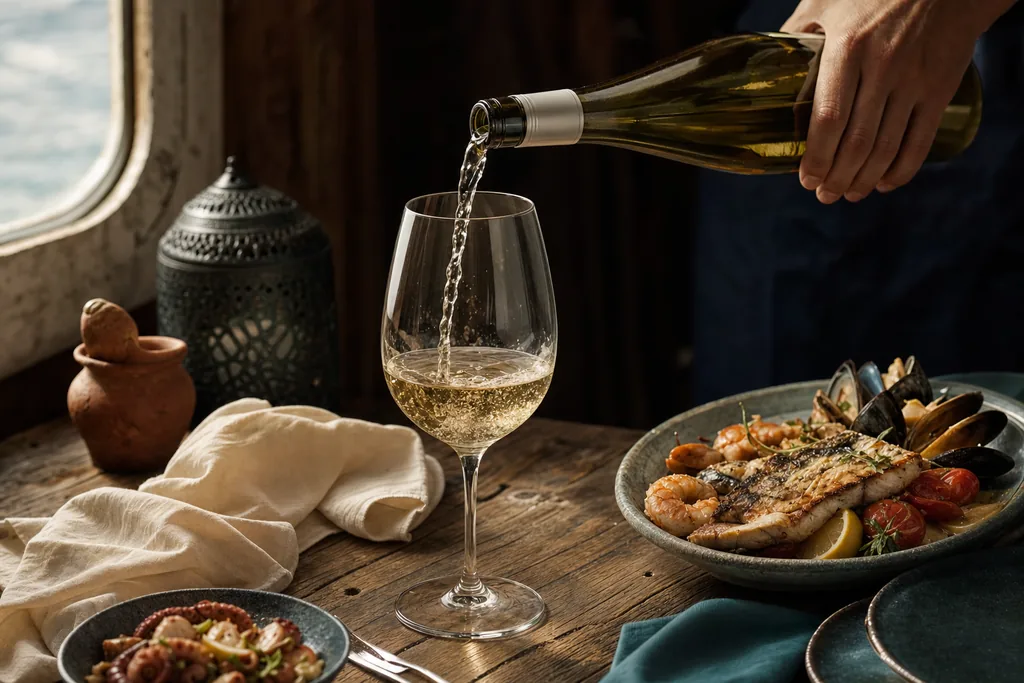
Acidity is the sensation that makes your mouth water after a sip, and it decides whether a wine will work with food. High acidity clears fat from the palate, which is why a fresh white works with fried fish. Low acidity makes a wine soft, but also harder to pair.
Tannin and body
Tannin is the grip on the gums and is found mainly in reds. It is the reason a heavy red does not work with delicate fish, because with fish oil it leaves a metallic aftertaste. Body is a separate thing: how heavy the wine sits in the mouth, like the difference between skimmed and full-fat milk.
What are the most common mistakes?
The five that keep repeating
The wrong temperature is the first and most frequent, because on its own it can make a good wine unrecognisable. The second is an over-full glass with no room to swirl: a third is plenty. The third is perfume, cigarette smoke or a strong dish nearby, all of which drown the sense of smell. The fourth is rushing, because most wines change noticeably in the first ten minutes in the glass. The fifth is the wrong glass, though it is the least important of the five.
What is not a mistake
Failing to identify a particular aroma is not a mistake, it is a normal beginning. Vocabulary is built by comparison, not by reading. Two wines side by side teach more than ten wines separately over a month.
Should you spit, and how many wines at once?
At a professional tasting you spit, at dinner you do not. The reason is not etiquette but volume: when you go through twenty wines, the alcohol dulls the palate by around the fifth. For a tasting at home or in a restaurant, three to five wines is the sensible ceiling, working from lighter to fuller and from dry to sweet. Between wines, drink water and eat something neutral such as bread.
From our kitchen
We have worked with a sommelier since 2016, and most of the questions he gets at the table are not about grapes and regions but about two things: whether the wine is cold enough, and what to have with this fish. The second is the more important one, and we go into it in detail in the piece on white, rosé or red with fish.
One observation from the deck that does not appear in tasting books: outdoors, the sensations shift. The sea breeze carries its own salt aroma, and in the evening the temperature drops by several degrees within half an hour, which means the wine in your glass moves in the opposite direction to the bottle in the ice bucket. So on the terrace we pour smaller measures more often rather than filling the glass to the top.
And one practical point for a seafood kitchen: with fish and shellfish, tasting is almost always done with the food rather than before it. The reason is that salinity on the plate shifts the acidity in the glass noticeably. A wine that seems sharp on its own can turn out to be exactly right alongside seafood. So if you are going to try several wines with us, we suggest doing it with the dishes themselves on the table.
Frequently asked questions
Do you need a special glass for tasting?
It helps, but it is not essential. Any glass that narrows towards the top and is held by the stem will do, because it gathers the aromas and does not warm the wine. More important than the shape of the glass is the temperature of the wine.
How long does wine keep changing in the glass?
Most wines open up noticeably in the first five to ten minutes, and fuller reds even after half an hour. So the first sip is rarely the most revealing, and it is worth coming back to the glass later.
What does it mean for wine to "breathe"?
It means contact with air, which softens tannins and releases aromas. Simply opening the bottle does almost nothing, because the contact area is tiny. What has a real effect is decanting, or simply swirling in the glass.
Do you hold tasting evenings?
Yes, we run tasting evenings where the sommelier guides you through the steps and the selection is chosen to go with the seafood dishes. Dates are announced in advance and places are limited, so booking is needed.
Five steps, one minute
Tasting is not a ritual for connoisseurs, it is a habit built with every bottle you open. Look, swirl, smell, sip and wait. The only thing you genuinely need to fix from day one is the temperature, because on its own it ruins more wine than everything else combined.
Want to go through the steps with someone who does it every day? Book a table and ask about the tasting evenings, or look at the menu to choose the dishes to pair them with.